
Series: The History of DNA Technology — Part 1
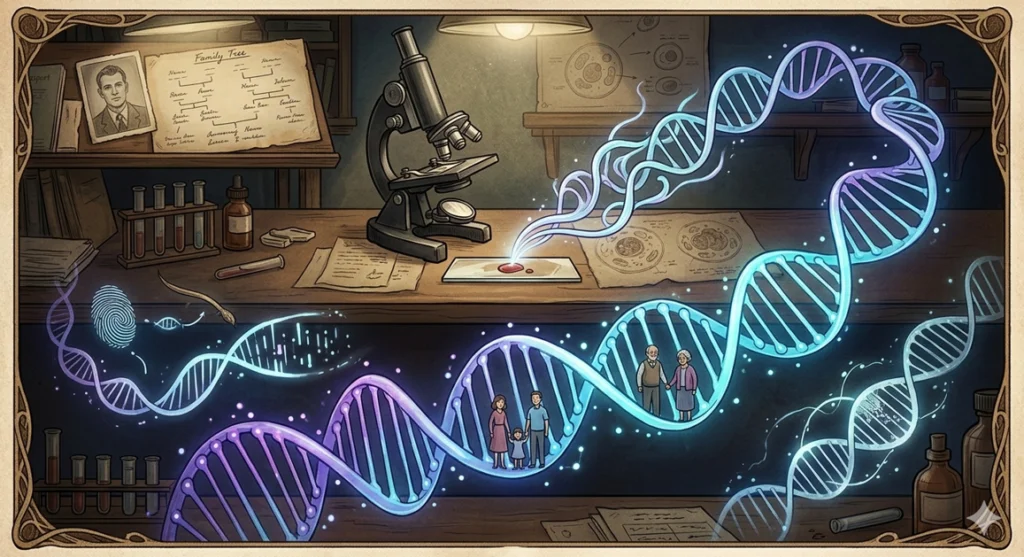
🧬 The Emergence of DNA Testing: The Discovery That Changed Science and Justice
The Eureka Moment: September 10, 1984
It all started almost by accident. On the morning of September 10, 1984, at 9:05 AM, British geneticist Sir Alec Jeffreys at the University of Leicester, England, obtained the first “DNA fingerprint” in history—and he later described it as “terribly imperfect.”
Jeffreys was researching genetic markers in the human genome. While hybridizing a probe with a Southern blot containing DNA samples from his lab technician and her parents, he saw a pattern that looked like a blurry barcode. The patterns were unique to each individual and appeared to be inherited within the family. It was a true “eureka moment”; he was suddenly standing before something entirely new: identification based on DNA.
Within thirty minutes of seeing the image on the X-ray film, Jeffreys grasped the potential scope of the discovery—what would later be known worldwide as DNA Fingerprinting.
The Scientific Basis: What is RFLP?
The technique Jeffreys developed became known as RFLP (Restriction Fragment Length Polymorphism). In 1984, Jeffreys and his colleagues developed this method using variability between individuals called restriction fragment length polymorphisms for forensic identification.
In simple terms: every person’s DNA contains repeated regions in unique locations throughout the genome. By “cutting” the DNA with specific enzymes, the resulting fragments vary in size from person to person—creating a unique pattern, much like a biological barcode.
⚙️ How Early DNA Testing Worked — Step by Step
The original process was the gold standard in forensic labs through the 1990s. However, it required significant amounts of DNA, was slow, and often took one to two weeks to produce a result.
The detailed stages were:
- DNA Extraction: Biological material (blood, saliva, hair root) was chemically processed to isolate DNA from the cells.
- Restriction Enzyme Digestion: Special enzymes acted as “molecular scissors,” cutting the DNA at specific points in the genetic sequence.
- Agarose Gel Electrophoresis: DNA fragments were separated by size using an electric field through a gel. Smaller fragments migrated faster; larger ones moved slower—creating “bands” at distinct positions.
- Southern Blot: This methodology was used to identify specific loci and alleles from a multitude of DNA fragments. The gel was transferred to a nylon or nitrocellulose membrane to “fix” the pattern.
- Probe Hybridization: Jeffreys used multi-locus probes labeled with radioactive phosphorus to visualize the results. These probes recognized highly variable “minisatellites” in the DNA, generating an individual band pattern—the “DNA fingerprint.”
- Autoradiography: The X-ray film was exposed to the membrane for several days, revealing the band pattern visible to the human eye.
🔬 The Early Laboratory Equipment
Performing these tests in the 1980s required a sophisticated suite of hardware:
- Centrifuge: Used to separate cellular components during DNA extraction.
- Electrophoresis Tank: A chamber with agarose gel submerged in a conductive buffer, connected to a DC power supply.
- Power Supply: Generated the constant electric field necessary for fragment migration.
- UV Transilluminator: Ultraviolet light used to visualize DNA stained with ethidium bromide in the gel.
- Hybridization Oven: A rotating oven where membranes were exposed to radioactive probes at controlled temperatures.
- Darkroom and Film Processor: Used to develop the X-ray films, exactly like traditional analog photography.
Tech Fact: The radioactivity of the probes was short-lived, and importing isotopes was extremely complicated. This made the process expensive and limited it to very few laboratories worldwide.
🚔 The First Forensic Case: 1986, England
The first use of DNA as a forensic tool occurred in 1986 in Leicestershire, UK. Jeffreys was asked to assist police in solving two cases of rape and murder involving two teenagers. This case is considered a landmark because it not only proved the technology’s worth but also demonstrated the power of DNA to exonerate the innocent.
The results were shocking: DNA proved that an initial suspect had been wrongfully accused—and eventually led to the identification of the true killer, Colin Pitchfork, following a mass screening of the local population.
⏱️ A Slow but Revolutionary Technology
By the time of the O.J. Simpson trial in the mid-1990s, the turnaround time between collecting a sample at a crime scene and finalizing the expert report was still at least eight weeks. Despite this slowness, DNA testing was already considered the greatest revolution in forensic science since the advent of traditional fingerprinting.
📅 Timeline — The Early Days of DNA
| Year | Milestone |
| 1953 | Watson and Crick describe the DNA double helix structure. |
| 1984 | Alec Jeffreys discovers DNA Fingerprinting (Sept 10). |
| 1985 | First scientific publication and first use in an immigration case. |
| 1986 | First criminal case resolved with DNA (Leicester, UK). |
In the next post of our DNA series, we will discuss the arrival of PCR (Polymerase Chain Reaction)—the technology that revolutionized DNA testing in the 1990s, making it faster, cheaper, and capable of working with microscopic biological samples.
How do you feel about the transition from analog forensic methods to the digital precision of DNA? Let us know in the comments!