
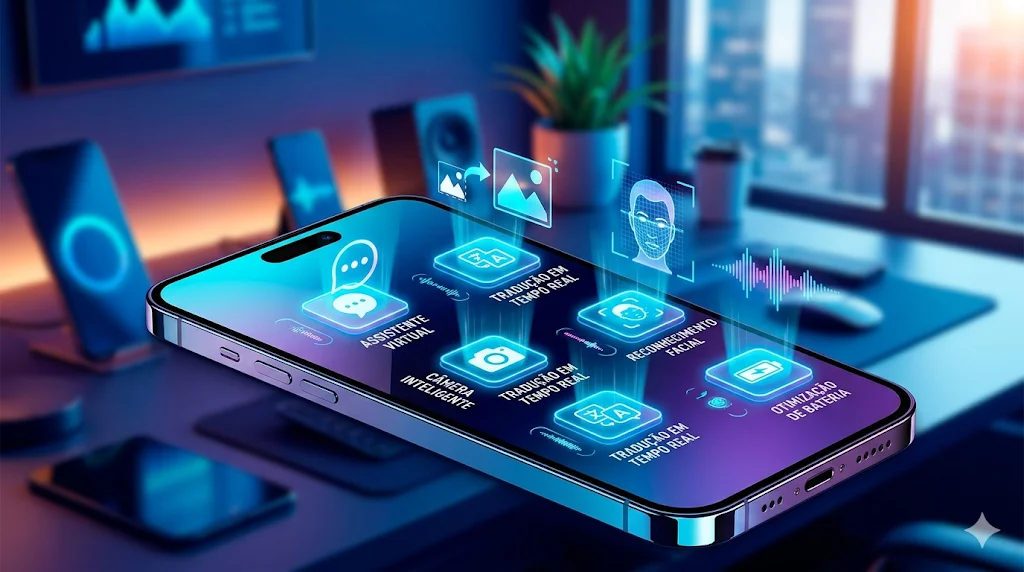
The Invisible Brain: How AI Redefined Smartphones in 2026
Artificial Intelligence in smartphones is no longer “futuristic”—it is integrated into virtually everything you use daily, often without you even noticing. AI in our phones has moved from being an extra feature to becoming the operating system itself. In 2026, your device doesn’t just execute commands; it anticipates intentions through hybrid processing that combines the power of the cloud with the speed and privacy of on-device processing.
Here are the master pillars of this technology today:
1. Personal Assistants with Contextual Reasoning
Assistants have evolved from simple command executors (like the early Siri/Google Assistant) into Generative AI agents.
- What changed: They now possess “screen awareness.” If you are looking at an invitation in an email, you can simply say “Book this,” and the AI identifies the date and location, opening the calendar app on its own.
- The differentiator: They understand nuances, irony, and complex contexts, maintaining a fluid and natural conversation history.
2. Computational Photography and Generative Video
The lens is merely the entry point; the final image is constructed by neural networks.
- Semantic Editing: AI recognizes every layer of the photo (sky, skin, grass) and applies distinct treatments to each one.
- Real-Time Generative Video: Features that allow for background noise removal, swapping video call backgrounds, or even stabilizing shaky footage using frame prediction, ensuring cinema-quality results from a pocket device.
3. Predictive Hardware Management and NPUs
The great silent revolution is in the chips. Modern processors feature dedicated NPUs (Neural Processing Units).
- Dynamic Optimization: AI doesn’t just close apps; it predicts which app you will open at 8 AM and pre-loads it into memory while putting the rest of the hardware into an ultra-low power state.
- Battery Life: By learning charging cycles, the smartphone manages power intake to reduce chemical battery wear, extending the device’s lifespan by years.
4. Creative Writing and Intelligent Communication
The keyboard doesn’t just predict words; it acts as a writing co-pilot.
- Tone Adjustment: You write a quick draft, and the AI offers “Professional,” “Friendly,” or “Urgent” versions.
- Systemic Summaries: The smartphone generates smart summaries of long message threads or emails directly in the notification center, highlighting only what requires your action.
5. Biometric Security and “Active Defense”
Security has shifted from passive (waiting for an attack) to proactive.
- Behavioral Analysis: AI identifies if the way the phone is held or how the screen is touched has changed abruptly (indicating a possible theft) and instantly locks access to banking apps.
- Deepfake and Scam Detection: Real-time filters warn if a voice or video call appears to be AI-generated, protecting the user against social engineering fraud.
6. On-Device AI: Privacy and Speed
The strongest trend of 2026 is Offline processing.
- Total Privacy: Many translation, summarization, and photo editing tasks happen without any data leaving your device. This makes the response instantaneous and ensures your personal life is not sent to external servers.
The Technological Leap (2025–2026)
What truly separates old smartphones from current ones is Native Multimodality. The phone now “sees” through the camera, “hears” the environment, and “reads” your data to create a unique experience. It is no longer just a tool for phone calls and internet access; it is an adaptive intelligent system that has become your digital representative.
What do you think about? Share your opinion in the comments box below.