
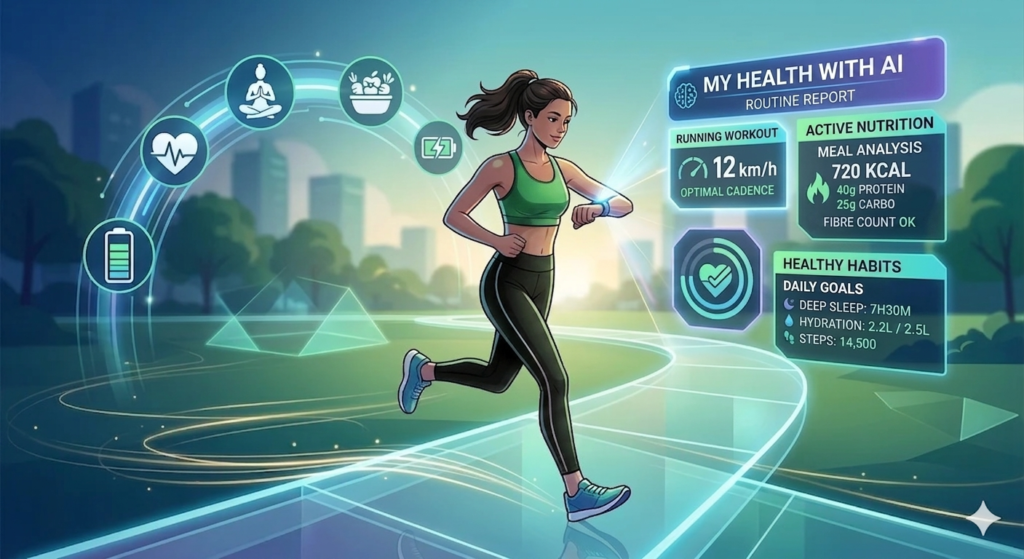
In 2026, Artificial Intelligence has leaped from a “reminder assistant” to a true proactive health agent. It no longer just organizes data; it understands your biological and behavioral context.
Here are the primary ways AI is transforming healthy routines right now:
1. Agentic AI: From Planning to Execution
The major breakthrough of 2026 is Agentic AI. It doesn’t wait for you to ask, “What should I eat?”
- Fridge & Grocery Management: Integrated into smart home systems, the AI monitors your inventory and generates automated shopping lists based on your nutritional goals and allergy restrictions.
- Automatic Booking: If your training plan includes swimming or tennis, the AI can check availability at nearby courts or pools and handle the reservation for you during gaps in your schedule.
2. Visual Nutrition and Biofeedback
Nutritional data analysis has become instantaneous and significantly more accurate:
- Photo Scanning: Take a photo of your plate, and the AI identifies macro and micronutrients in seconds, adjusting suggestions for your next meal to balance your daily target.
- Wearable Integration: If your smartwatch detects a stress spike or a drop in glucose, your assistant can suggest a specific food (such as magnesium for relaxation) or an immediate breathing technique.
3. Extreme Workout Personalization
Forget generic gym workout sheets.
- Dynamic Progression: Training apps now use Computer Vision via your phone’s camera to correct your posture in real-time and adjust weights or repetitions based on your visible fatigue and heart rate.
- “Micro-moment” Workouts: If the AI notices a meeting was canceled and you have 15 minutes free, it suggests a high-intensity “micro-workout” or a stretching session to compensate for sedentary time.
Text continues below…
4. Mental Health and Sleep (Cognitive Hygiene)
- Burnout Detection: By analyzing your typing patterns and voice tone during calls, AI can identify early signs of mental exhaustion and “block” non-essential notifications, suggesting a break or guided meditation.
- Sleep Optimization: AI regulates room temperature, lighting, and even cancels external noise in real-time to ensure you remain in deep sleep phases for the necessary duration.
Table: The Role of AI vs. The Human Role
| Function | What the AI Does (2026) | What You (The Human) Do |
| Consistency | Sends prompts and gamifies habits. | Makes the decision to start. |
| Nutrition | Calculates and suggests menus. | Chooses the flavor and eats mindfully. |
| Training | Adjusts technique and load. | Executes the physical effort. |
| Health | Monitors vital signs 24/7. | Consults a doctor for a final diagnosis. |
Important Attention:
While 2026 AI is incredible, it works as a support tool. As we have emphasized in other articles here on the Blog regarding various AI applications, human validation is crucial. AI can suggest an intense workout, but only you know the limit of joint pain or sudden discomfort. The human oversight of qualified professionals (doctors, nutritionists, and trainers) remains the gold standard for health.
What about you? Have you used or do you currently use AI to assist your workouts? Let us know in the comments!