
Exactly 15 years ago, Google introduced the Chromebook to the world—a laptop built for a cloud-centric ecosystem where the browser was everything. That was May 2011. At the time, many laughed at the concept. Today, Chromebooks form the backbone of millions of classrooms and offices worldwide.
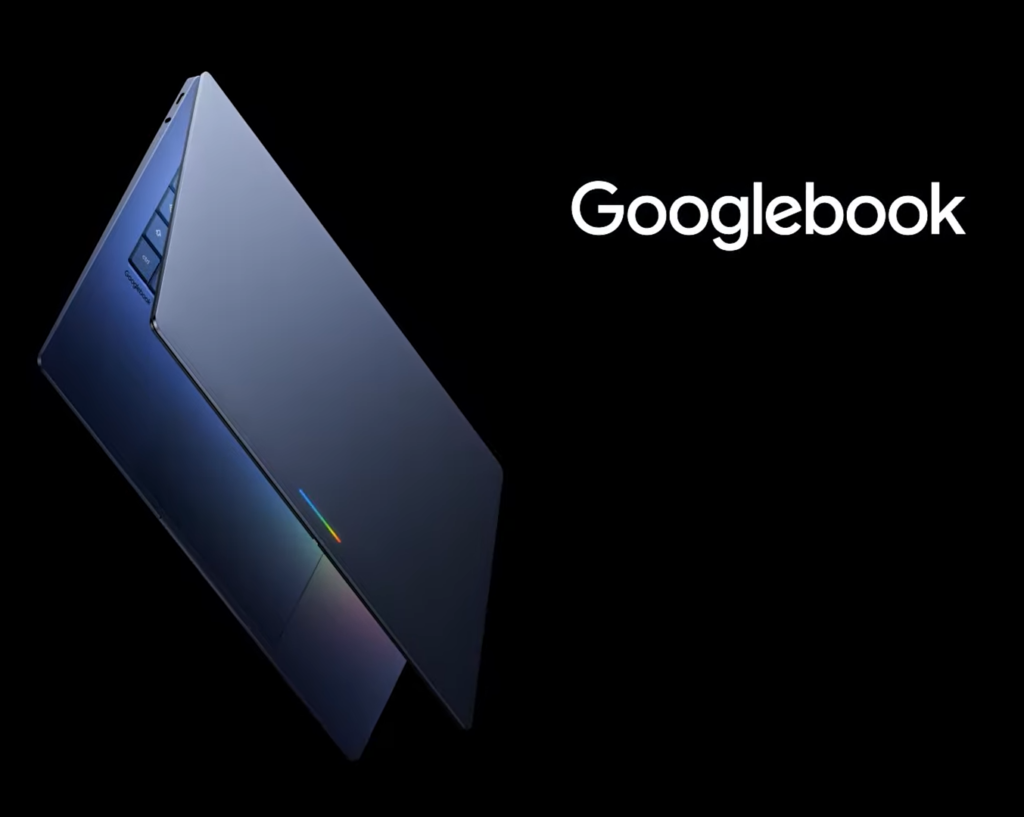
Now, in May 2026, Google is betting big on a fresh pivot. The Googlebook is a new laptop standard created by Google that runs an operating system based on Android and ChromeOS, internally codenamed “Aluminum OS.” It was announced in May 2026 as the official successor to both the Chromebook and the Pixelbook Go.
The question on everyone’s mind is: Has Google finally nailed it?
The Origin: 15 Years of Chromebook and a Massive Pivot
As computing shifts from an operating system framework to an intelligence system architecture, Google seized the opportunity to rethink the laptop once again.
This transition did not happen overnight. In July 2025, executive Sameer Samat confirmed to TechRadar1 that Google was “combining ChromeOS and Android into a single platform”—realizing rumors that had circulated for months and developer-community wishes that spanned a decade. The project surfaced again in September 2025 at Qualcomm’s Snapdragon Summit, featuring Google’s hardware chief, Rick Osterloh, alongside Qualcomm CEO Cristiano Amon.
The official unveiling took place in May 2026 at a live event titled The Android Show: I/O Edition, where Google presented the Googlebook alongside Android 17, showcasing deep integration between the two platforms.
What Exactly Is the Googlebook?
The Googlebook is a new category of premium laptops running an Android-based operating system with Gemini AI baked directly into the OS level. Google describes this value proposition as shifting “from an operating system to an intelligence system.” In practice, this means AI is not an auxiliary layer slapped on top of the system, but the very foundation upon which everything is built.
The practical impact for consumers is massive: because the Googlebook runs natively on Android, the entire Google Play catalog is available without the compatibility bugs that plagued Android apps on Chromebooks for years.
It represents a fusion of the best of both worlds: the robustness and app ecosystem of Android combined with the desktop productivity of the Chrome browser, supercharged by Gemini at every turn.
The Four Pillars of the Googlebook
The Googlebook experience is sustained by four core features and one defining design signature: Magic Pointer, Create Your Widget, Quick Access, Cast My Apps, and the Glowbar.
🖱️ Magic Pointer — The Smart Cursor This is the most innovative feature and the emblem of the Googlebook philosophy. Instead of just pointing and clicking, moving your cursor triggers rapid contextual suggestions based on what is active on your screen. For example, hovering over a date in an email allows you to instantly schedule a meeting. Selecting two images—like your living room and a new sofa—lets you visualize them together using AI. Magic Pointer tools include the ability to query, compare, and merge elements seamlessly by simply pointing.
🧩 Create Your Widget — AI Personalization The Create Your Widget feature allows users to generate custom widgets simply by describing what they want to Gemini. The AI searches the web or hooks into apps like Gmail and Calendar to forge a unified, bespoke dashboard. Planning a family reunion in Berlin? Gemini will organize flight data, hotel listings, restaurant reservations, and even a countdown timer within a dedicated desktop space.
📱 Cast My Apps and Quick Access — Ecosystem Integration Because the Googlebook runs Android, smartphone integration is significantly more fluid than anything Chromebooks ever delivered. Connected Android smartphone apps run natively on the Googlebook, a feature mirroring Apple’s iPhone Mirroring on macOS.
If you are working on your laptop and remember you need to finish your daily Duolingo lesson, you can open the app directly on the laptop screen without picking up your phone. Furthermore, Quick Access lets you view, search, and insert files from your phone directly within the Googlebook file manager without manual transfers.
✨ Glowbar — The Googlebook Visual Signature The Glowbar is an LED lightbar embedded into the laptop lid, akin to the navigation bar found on Android smartphones. It reacts dynamically to Gemini commands, displaying custom animations based on what the AI is processing. For long-time Google fans, it is a direct nod to the iconic design language of the original Pixelbook. Every certified Googlebook is required to include the Glowbar; it is a core element of the platform’s visual brand.
Hardware: What We Know So Far
Google has established strict hardware certification requirements for manufacturing partners, covering processing units, RAM, storage, and keyboard layouts—a system similar to Chromebook Plus but with elevated hardware baselines.
The company confirmed support for both ARM and x86 chips, allowing for a wide variety of hardware configurations. The confirmation of ARM support is highly relevant, given Qualcomm’s on-stage presence with its Snapdragon laptop silicon back in late 2025.
Googlebook devices will be built with premium finishes and materials across a range of form factors and display sizes. While Google has not released official pricing tiers, the explicit use of the word “premium” indicates that Googlebooks will occupy the higher end of the notebook market. Further technical deep-dives regarding full specifications, specific chipsets, and retail pricing are expected at Google I/O 2026, starting May 19, 2026.
The Manufacturers: Who Is Building the Googlebook?
Google is collaborating with Acer, ASUS, Dell, HP, and Lenovo to manufacture the initial wave of Googlebooks.
Interestingly, Samsung—which maintains a robust laptop footprint via its Galaxy Book lineup—is absent from the initial rollout roster. However, this does not mean the company will never build a Googlebook; only time will tell. Details on the first batch of partner models will release progressively over the summer of 2026.
Google has not announced plans for a first-party flagship Googlebook—akin to its legacy Pixelbook line. However, Vice President John Maletis noted during an appearance on The Chrome Cast Podcast2:
“I cannot comment on the first-party hardware roadmap.”
It is a polite corporate way of telling consumers to stay tuned.
Release Timeline and Pricing Estimates
The retail launch of the first Googlebooks is locked for the fall of 2026, with a September-to-November window being the most probable timeframe to capture the global holiday shopping season.
Regarding pricing, nothing is official. Market analysis indicates that the first wave of Googlebooks will target premium price brackets, while a second wave—likely in 2027—will introduce budget-friendly alternatives. Analysts recommend caution when buying into the first generation of a platform undergoing such an expansive architecture shift.
Will the Chromebook Die?
Googlebooks will essentially succeed Chromebooks, even if Google avoids saying so directly. A spokesperson stated that the company will continue to support current Chromebook users, with devices receiving updates throughout their existing support lifecycles. The company added that many newer Chromebooks will be eligible to transition into the new experience, though explicit migration documentation has not yet been shared.
ChromeOS will remain active in the educational and low-cost enterprise sectors. The Googlebook platform serves as a more sophisticated, premium sibling—not an immediate replacement for the massive Chromebook install base in schools worldwide.
Googlebook vs. Microsoft Copilot+ PCs: The AI Laptop War
Google isn’t just refreshing hardware; it is initiating a long-term transition away from ChromeOS—the platform that built its laptop presence—toward an Android-based OS with AI built directly into the foundation. With major PC hardware OEMs already onboard, this is a platform play as much as a silicon play. It acts as a direct counter-response to Microsoft, which has been pushing its Copilot+ PC ecosystem since 2024.
The core divergence in approach is clear: while Microsoft added Copilot as an AI companion layer on top of legacy Windows architecture, Google is building an OS where AI functions as the bedrock, not an add-on.
A Point of Concern: System-Level AI and Privacy
The Googlebook announcement lands amidst an ongoing legal challenge. In November 2025, a proposed class-action lawsuit was filed in California alleging that Google silently activated Gemini across all user Gmail, Chat, and Meet accounts without explicit user consent. The lawsuit claims violations of the California Privacy Act and the Stored Communications Act, and remained active at the time of the Googlebook announcement.
It serves as a poignant reminder: when AI is woven directly into the fabric of an operating system, data control and user privacy questions take on a much larger dimension than they do within an isolated application sandbox.
Conclusion: A New Era or Another Google Promise?
The Googlebook is undoubtedly Google’s most ambitious play in personal computing since the launch of the original Chromebook in 2011. The vision is coherent, the hardware partners represent industry heavyweights, and the integration of the Android and Gemini ecosystems has real potential to offer a differentiated user experience.
The ultimate hurdle lies in whether software developers will build desktop-class Android apps to match Google’s loftier hardware ambitions. If that ecosystem matures, the Googlebook could become far more than “just another Chromebook.”
The fall of 2026 will provide the answer. But one thing is certain: the cursor you have relied on for decades will never be the same again.
Leave a comment down below…
Oh, and you might also like the following article:
- https://www.techradar.com/phones/android/i-think-you-see-the-future-first-on-android-googles-android-leader-sameer-samat ↩︎
- https://www.youtube.com/watch?v=J-vRHuTPHik&t=2089 ↩︎